Early Lung Cancer Detection Starts Before Symptoms Appear
Most people only think about cancer screening when something feels wrong.
A cough that does not go away.
Chest discomfort.
Sudden weight loss.
Shortness of breath.
Blood in the phlegm.
But for lung cancer, waiting for symptoms can be risky.
Early-stage lung cancer often does not cause obvious warning signs. A person may still feel normal, continue working, and live their usual routine while small changes are already developing inside the lungs.
That is why early lung cancer detection is important.
A health screening is not only about checking whether you feel healthy today. It is about finding possible problems before they become harder to treat.
For people in Johor Bahru who are at higher risk of lung cancer, a Low Dose CT lung scan, also known as LDCT, may be an important part of a more complete health screening plan.
LDCT is not a cancer diagnosis test. It is a screening tool that helps doctors detect small lung nodules or suspicious changes earlier, so the right follow-up can be planned if needed.
Why Basic Health Screening May Miss Early Lung Changes
Many health screening packages include blood tests, urine tests, and sometimes a chest X-ray. These are useful for checking many parts of your health, but they do not detect everything.
- Blood tests cannot clearly show small lung nodules.
- A normal urine test does not mean your lungs are clear.
- A chest X-ray may not always detect very small or early lung changes.
This is where LDCT becomes important.
A Low Dose CT lung scan provides more detailed images of the lungs compared to a standard chest X-ray. It allows doctors and radiologists to look for small nodules or suspicious changes that may not be visible in a basic screening.
For high-risk individuals, the screening method needs to match the risk. If the main concern is early lung cancer detection, LDCT may offer a more targeted lung assessment than a basic chest X-ray.
What Is a Low Dose CT Lung Scan?
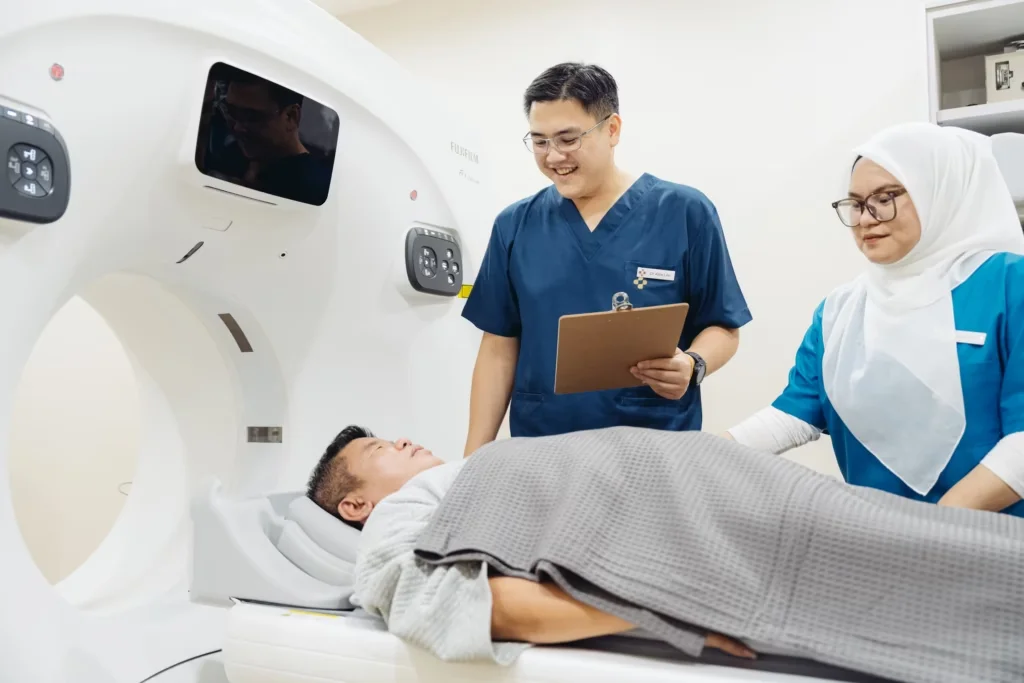
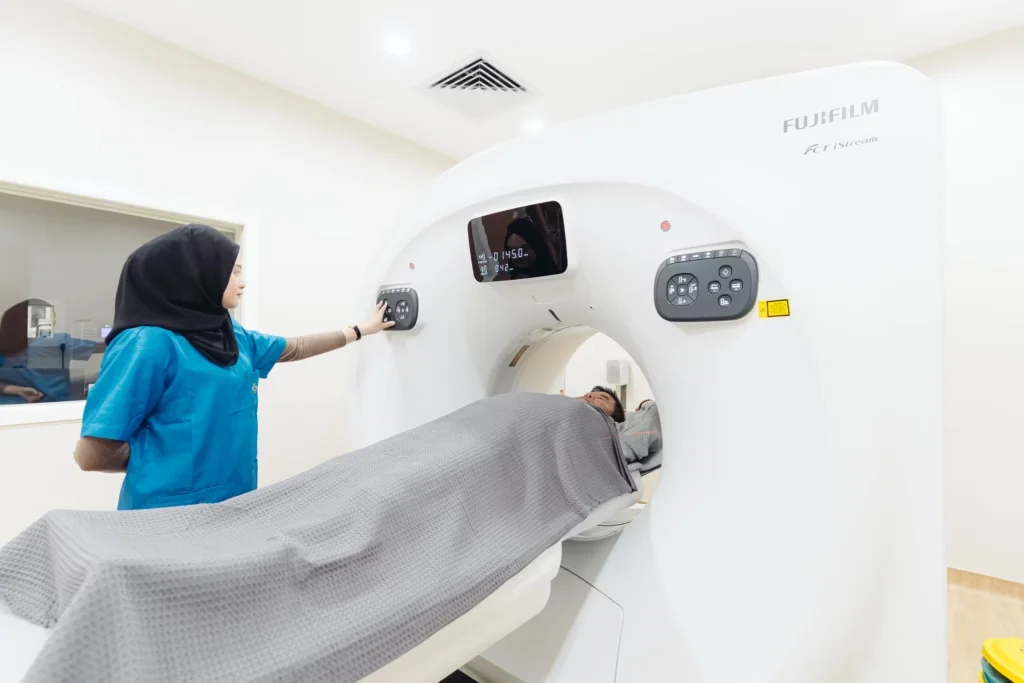
A Low Dose CT lung scan is a specialised imaging test used to check the lungs in greater detail.
During the scan, the CT machine captures multiple thin images of the lungs. These images allow the medical team to view the lungs layer by layer, instead of relying on a single flat image.
The term “low dose” means the scan uses a lower amount of radiation compared to a standard diagnostic CT scan. It is designed for screening, where the goal is to detect possible early abnormalities while keeping radiation exposure as low as reasonably possible.
In most cases, the scan is:
- Fast
- Painless
- Non-invasive
- Done without injection
- Done without contrast dye for initial screening
- Completed within a short appointment time
The purpose is not to confirm cancer immediately. The purpose is to detect possible early warning signs that may need monitoring, follow-up, or further investigation.
Who Should Consider LDCT Screening?
LDCT screening is not necessary for everyone. It is usually more relevant for people with higher lung cancer risk.
You may want to consider speaking to a doctor about LDCT screening if you are:
- 50 to 80 years old
- A current smoker
- A former smoker who quit within the past 15 years
- Someone with a close family history of lung cancer
- Someone with chronic lung disease such as COPD or emphysema
- Someone with long-term exposure to second-hand smoke
- Someone exposed to asbestos, silica, industrial dust, or harmful particles at work
- Someone with at least 20 pack-years of smoking history
A pack-year is used to estimate smoking exposure.
Formula:
Packs smoked per day × Number of years smoked = Pack-years
Examples:
- 1 pack per day for 20 years = 20 pack-years
- 2 packs per day for 10 years = 20 pack-years
- Half a pack per day for 40 years = 20 pack-years
If you are unsure whether you fall into the high-risk group, it is best to discuss your smoking history, family history, and work exposure with a doctor.
The goal is not to screen everyone the same way. The goal is to identify people who may benefit most from earlier and more detailed lung assessment.
Can Non-Smokers Consider LDCT Screening?
Smoking remains the strongest risk factor for lung cancer, but non-smokers can still develop lung cancer.
For non-smokers, routine LDCT screening is not automatically recommended for everyone. However, a doctor may consider it if there are strong risk factors, such as family history of lung cancer, long-term second-hand smoke exposure, chronic lung disease, workplace exposure to harmful dust or chemicals, or frequent exposure to cooking fumes in poorly ventilated spaces.
For non-smokers, the decision should be based on personal risk, not fear. A doctor can help decide whether LDCT is suitable or whether another type of health monitoring is more appropriate.
What Happens If Something Is Found?
One concern people have about cancer screening is this:
“What if the scan finds something?”
It is important to understand that not every lung nodule is cancer.
Many lung nodules are harmless. Some may come from past infections, inflammation, scarring, or other non-cancerous causes. What matters is the nodule’s size, shape, density, and whether it changes over time.
Depending on the result, your doctor may suggest:
- Routine yearly screening
- A follow-up scan after a few months
- Further CT imaging
- Referral to a respiratory specialist
- Additional tests if the finding looks suspicious
This is why proper medical interpretation is important.
A good screening process should not stop at the scan. Patients should also understand what the result means, whether follow-up is needed, and when the next check should be done.
Accessing LDCT Screening in Johor Bahru
At Premium Pro, lung health screening is approached with early detection in mind. LDCT uses advanced CT imaging to produce detailed cross-sectional images of the lungs, allowing doctors to detect small nodules or suspicious changes that may not be visible on a normal X-ray.
Premium Pro Healthcare Centre
53 & 55, Jalan Mutiara Emas 10/2,
Taman Mount Austin,
81100 Johor Bahru, Johor Darul Ta’zim
018-762 8355
Conclusion: Do Not Wait for Symptoms to Start Screening
Early lung cancer detection is about acting before symptoms appear.
For lung cancer, this is especially important because early-stage disease may not cause obvious signs. A person can feel normal while small changes are already present in the lungs.
If you are a current smoker, former smoker, or someone with higher lung cancer risk, a Low Dose CT lung scan may help provide a more detailed lung assessment than a basic chest X-ray.
Screening does not replace a doctor’s consultation. It also does not replace quitting smoking. Stopping smoking remains one of the most important ways to reduce lung cancer risk.
If you are in a higher-risk group, LDCT screening may help detect possible lung changes earlier, when there may be more room for action and proper follow-up.